Performance Training

Strength and conditioning for people who want to move and perform better long-term.

Performance training is for building capacity with enough structure to respect injury history, current symptoms, and the real demands of your life or sport.

Navy mat, wall bars, and movement straps in a clean rehab studio

Strength work for people who care how their body holds up.

Training should not feel like a random list of hard exercises. It should answer a specific question: what does your body need to do better, tolerate better, or repeat more confidently?

The work blends movement assessment, strength and conditioning principles, and rehab-informed progression so you can build capacity without guessing what is too much or too little.

How performance training works here.

The exact plan changes from person to person, but the appointment stays grounded in assessment, clear communication, and useful next steps.
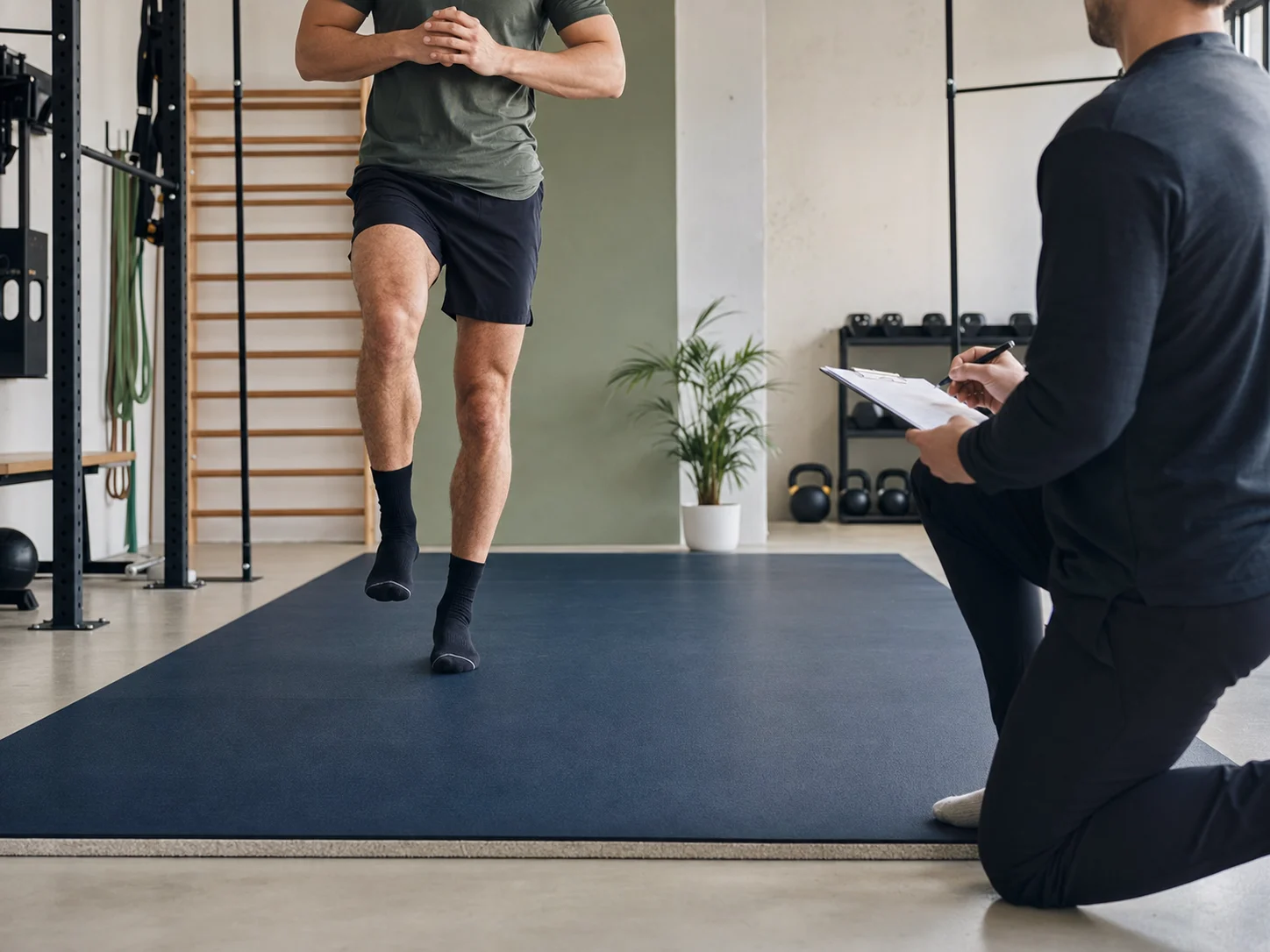
Rehab-informed movement assessment with a client balancing on one leg in a clean training studio
01

Assess movement and capacity.

We start by looking at how you move, what feels limited, and what your goal demands. Assessment gives the training plan a reason instead of turning the session into guesswork.

  • Movement quality
  • Load tolerance
  • Goal-specific baselines
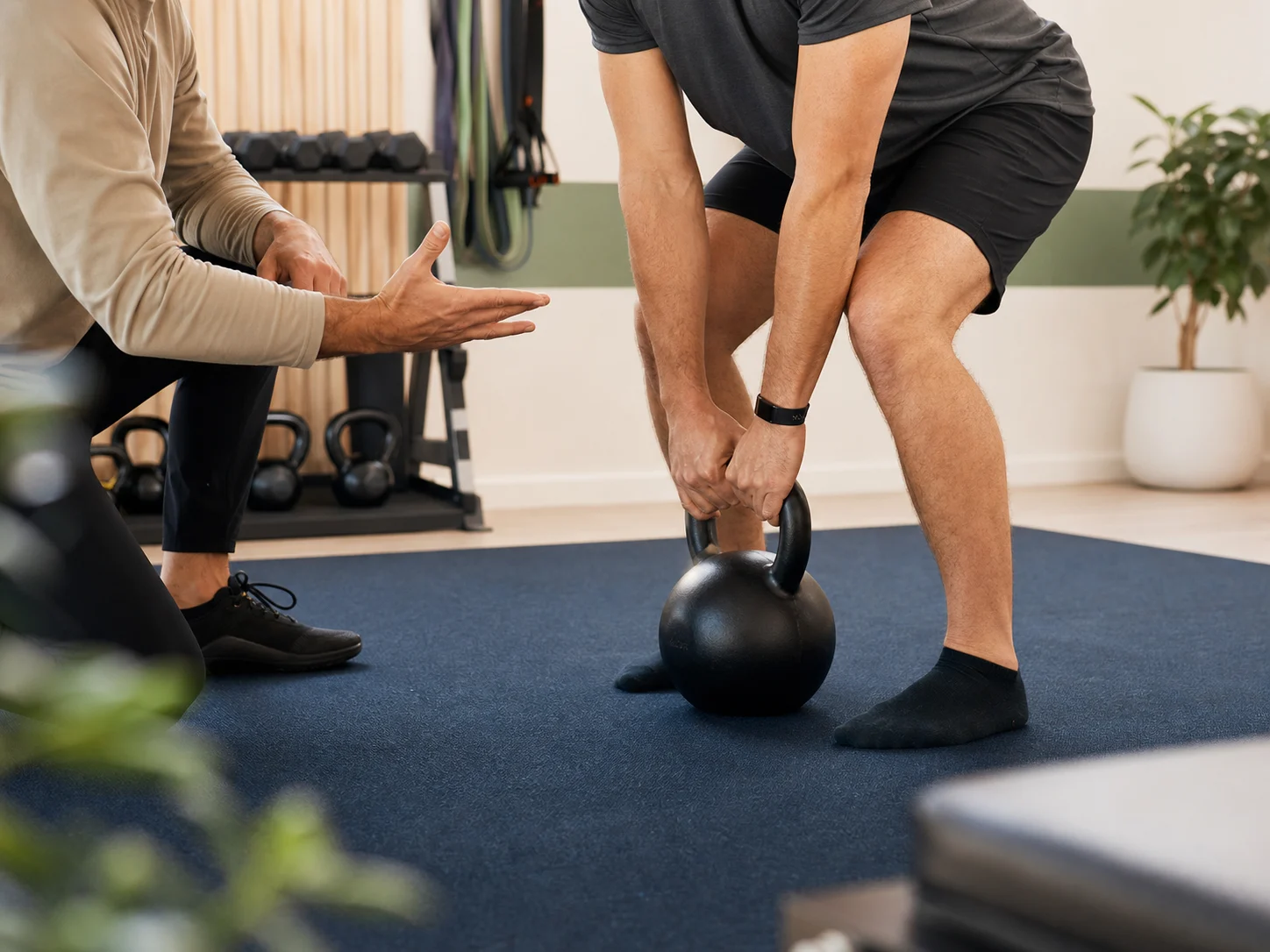
Coach guiding a controlled kettlebell strength movement in a modern training studio
02

Coach the basics under load.

Strength work is coached with attention to setup, tempo, range, and confidence. The right version of an exercise should challenge you without ignoring what your body is telling us.

  • Technique and control
  • Strength progressions
  • Training around limitations
Kettlebell, dumbbells, resistance bands, and training notebook arranged on a navy mat
03

Progress the plan over time.

The plan evolves as your capacity changes. That can mean adding load, increasing complexity, building conditioning, or improving how well your body recovers between sessions.

  • Planned progressions
  • Resilience over quick fixes
  • Capacity for life and sport

What performance training is built around.

Training should give you a clear sense of what you are building and why. The plan is adjusted around progress, symptoms, recovery, and the demands you are preparing for.

01

What movement or strength qualities matter most for your goal.

02

Where symptoms, injury history, or confidence affect training choices.

03

Which exercises give the best return without adding unnecessary noise.

04

How to progress loading, volume, or complexity over time.

Focus areas for performance training.

Movement education
Rehab-informed strength programming
Long-term performance and resilience

Start with the appointment that fits the goal.

Book through Village Roots Wellness, or open the Google Business Profile for directions and clinic details.